

How Adjustable Thermostat Control Enhances Precision in Chemical Experiments
Classification: knowledge
Time:2026-04-10
How Adjustable Thermostat Control Enhances Precision in Chemical Experiments
Table of Contents
- 1. Introduction to Adjustable Thermostat Control in Chemistry
- 2. The Importance of Temperature Control in Chemical Experiments
- 3. How Adjustable Thermostats Work
- 4. Benefits of Using Adjustable Thermostats in Laboratory Settings
- 5. Choosing the Right Adjustable Thermostat for Your Needs
- 6. Applications of Adjustable Thermostats in Various Chemical Experiments
- 7. Challenges and Solutions in Temperature Control
- 8. The Future of Temperature Regulation in Laboratory Experiments
- 9. Frequently Asked Questions
- 10. Conclusion
1. Introduction to Adjustable Thermostat Control in Chemistry
In the realm of chemical experiments, precision is non-negotiable. Every reaction, every measurement, and every observation hinges on the meticulously controlled conditions within the laboratory environment. An adjustable thermostat serves as a cornerstone in achieving this level of precision. By allowing researchers to **fine-tune temperature settings**, adjustable thermostats not only enhance the accuracy of experimental results but also contribute to the overall **reliability** and **replicability** of scientific studies.
2. The Importance of Temperature Control in Chemical Experiments
Temperature control is critical in chemical reactions as it significantly affects reaction rates, product formation, and overall yields. Here are several reasons why maintaining an optimal temperature is crucial:
2.1 Impact on Reaction Rates
The rate of most chemical reactions increases with temperature due to the heightened kinetic energy of molecules. However, excessive heat can lead to **side reactions** or **decomposition** of sensitive compounds.
2.2 Influence on Product Quality
Inconsistent temperature control often results in variable product quality, making reproducibility difficult. Adjustable thermostats help maintain uniform temperature conditions, leading to **higher purity** and **better yields**.
2.3 Safety Considerations
In many chemical experiments, particularly those involving exothermic reactions, uncontrolled temperature fluctuations can pose serious safety risks. An adjustable thermostat allows for gradual temperature changes, minimizing the risk of dangerous reactions.
3. How Adjustable Thermostats Work
Adjustable thermostats utilize a **feedback control system** to maintain a desired temperature. This system typically includes:
3.1 Temperature Sensors
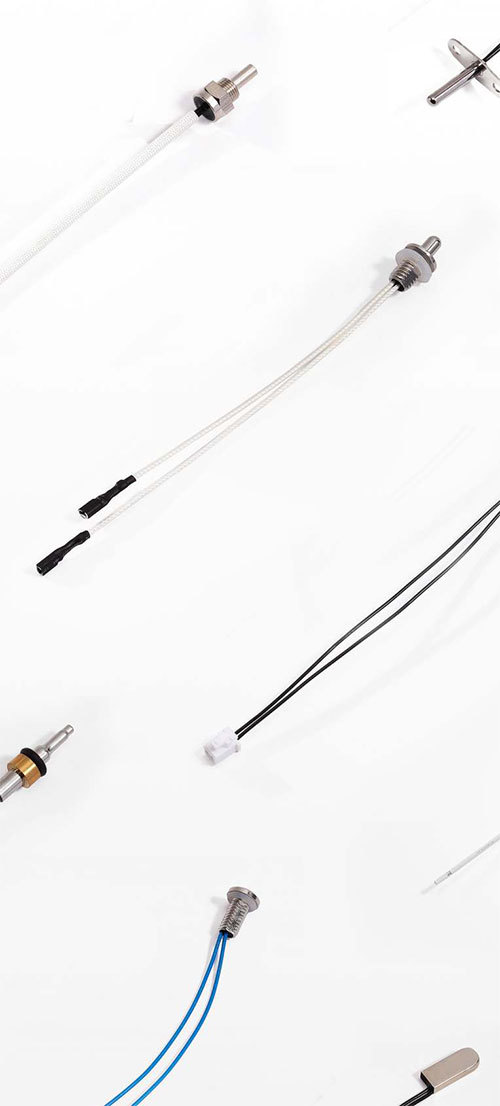
Sensors monitor the actual temperature of the environment or reaction vessel and provide data to the thermostat.
3.2 Control Algorithm
The thermostat utilizes algorithms to compare current temperatures to the desired setpoint, making real-time adjustments to the heating or cooling elements.
3.3 Actuator Mechanisms
These are the components that physically alter the temperature of the system, such as heating elements or cooling coils, ensuring that the set temperature is achieved and maintained.
4. Benefits of Using Adjustable Thermostats in Laboratory Settings
The integration of adjustable thermostats in chemical laboratories provides numerous advantages that significantly enhance experimental outcomes.
4.1 Enhanced Accuracy and Precision
The most significant benefit is the ability to achieve precise temperature control, which is critical for reproducible results.
4.2 Increased Experiment Flexibility
Researchers can easily adjust temperature settings to explore various conditions and their effects on chemical reactions.
4.3 Cost-Effectiveness
While adjustable thermostats may require an initial investment, they reduce the risk of failed experiments, saving both time and resources in the long run.
4.4 Improved Safety Standards
With better temperature management, laboratories can operate more safely, minimizing the possibility of hazardous incidents.
5. Choosing the Right Adjustable Thermostat for Your Needs
Selecting the appropriate adjustable thermostat is vital for optimizing experimental conditions. Here are some key factors to consider:
5.1 Temperature Range
Ensure that the thermostat can accommodate the necessary temperature range for your specific experiments.
5.2 Precision and Accuracy
Look for instruments that are capable of maintaining ±0.1 °C or better for high-precision requirements.
5.4 User Interface and Controls
A user-friendly interface enables researchers to adjust settings quickly and efficiently, enhancing usability.
5.5 Compatibility with Laboratory Equipment
Choose a thermostat that integrates well with existing laboratory apparatus, including reaction vessels and heaters.
6. Applications of Adjustable Thermostats in Various Chemical Experiments
The versatility of adjustable thermostats lends itself to a wide array of chemical applications:
6.1 Synthesis Reactions
In organic synthesis, maintaining precise temperature is crucial for ensuring the correct reaction pathways.
6.2 Crystallization Processes
Controlling temperature during crystallization improves the quality and size of the produced crystals.
6.3 Analytical Chemistry
In techniques such as chromatography and spectroscopy, precise temperature control can affect the separation and detection of compounds.
6.4 Biochemical Reactions
In biochemical experiments, temperature control is essential for enzymes and other biological molecules that can be sensitive to heat.
7. Challenges and Solutions in Temperature Control
While adjustable thermostats provide significant benefits, they are not without challenges.
7.1 Calibration Issues
Over time, thermostats may drift from their calibrated settings. Regular calibration is essential to maintain accuracy.
7.2 External Influences
External factors such as ambient temperature changes can influence the effectiveness of temperature control. Insulating the lab environment can mitigate these effects.
7.3 Equipment Limitations
Not all laboratory equipment is designed for precise temperature control. Investing in compatible devices ensures overall system performance.
8. The Future of Temperature Regulation in Laboratory Experiments
As technology advances, the future of adjustable thermostats in laboratories is promising.
8.1 Smart Thermostats
Emerging technologies, such as smart thermostats, can be programmed to adjust automatically based on preset conditions or data analytics.
8.2 Integration with IoT
The integration of thermostats with Internet of Things (IoT) devices allows for remote monitoring and adjustment, enhancing laboratory efficiency.
9. Frequently Asked Questions
What is the ideal temperature range for most chemical experiments?
The ideal temperature range varies by experiment, but most reactions occur optimally between 20°C to 80°C.
How often should I calibrate my adjustable thermostat?
Calibration should ideally be performed every six months or whenever you notice discrepancies in temperature readings.
Can adjustable thermostats be used in high-pressure experiments?
Yes, many adjustable thermostats are designed to withstand high-pressure conditions. Always check the specifications before use.
What safety features should I look for in an adjustable thermostat?
Look for features such as over-temperature protection, alarms, and fail-safe mechanisms to enhance safety.
How do I maintain my adjustable thermostat?
Regular cleaning, calibration, and avoiding exposure to extreme conditions will help maintain its functionality.
10. Conclusion
Adjustable thermostat control plays an indispensable role in enhancing the precision of chemical experiments. By providing the means to regulate temperature meticulously, researchers can significantly improve the accuracy, safety, and reproducibility of their work. Investing in high-quality adjustable thermostats tailored to specific experimental needs not only fulfills immediate research requirements but also paves the way for future advancements in the field. As laboratories continue to evolve, the importance of precise temperature control will remain a cornerstone of successful chemical experimentation.
Keyword: How Adjustable Thermostat Control Enhances Precision in Chemical Experiments
RELATED INFORMATION
How Adjustable Thermostat Control Enhances Precision in Chemical Experiments
How Adjustable Thermostat Control Enhances Precision in Chemical Experiments Table of Contents 1. Introduction to Adjustable Thermostat Control in Chemistry 2. The Importance of Temperature Control in Chemical Experiments 3. How Adjustable Thermostats Work 4. Benefits of Using Adjustable Thermostats in Laboratory Settings 5. Choosing the Right Adjustable Thermostat for Your Ne
2026/04/10

The Importance of Adjustable Thermostat Control in Laboratory Equipment
When it comes to laboratory equipment, precision and control are paramount, especially in fields like chemistry and biology. One essential component that contributes to this precision is the adjustable thermostat control. This feature allows scientists and technicians to fine-tune the temperature settings of their equipment, thereby ensuring that experiments can be conducted under strictly control
2026/04/03

Huilonghas passedls09001 certification in2003.0ur products are compliant with EU RoHS Directiveand certified by COC, VDE, UL, TUV, CE,CB.
Contact Us
+86-757-28397819
C1 Building, CSCEC'S S&TInnovation Park, No.81,Xijiao Road, Ronggui, Shunde, Foshan, Guangdong Province

Mobile Website